FREQUENTLY ASKED QUESTIONS
What is the difference between spa massage and therapeutic and/or medical massage?
In addition to stress relief and relaxation, a therapeutic massage focuses on the medical need or is more outcome-based. It is often used to manage pain, reduce inflammation, improve circulation, relieve nerve compression, improve digestion, increase flexibility or treat other health care concerns. It targets your needs through a variety of techniques. Spa massage and medical massage may feel similar, but their techniques differ. During a spa massage, the techniques likely focus on relaxation. Treatment based massage will use a broader set of therapies for muscle health and recovery. It may include specific follow-up recommendations, a targeted plan for treatment, along with recommendations for a series of timed visits versus a periodic spa visit.
Who may benefit from massage therapy?
-Chronic pain
-Muscle tension, adhesions or scar tissue
-Athletic performance
-Recover from injury
-Repetitive injuries
-Sciatica
-Fibromyalgia
-Pregnacy
-TMJ
-Headaches
-Stress, anxiety, or depression
-High blood pressure
How many sessions will it take to improve my particular problem?
With 1-3 sessions of focused massage therapy, most clients get the benefits of massage very quickly. The average person usually needs between 5-8 sessions to gain long term freedom from pain. The number of sessions needed depends on the severity and length of time that you have been dealing with the issue. *Please note that while we are committed to providing the highest level of massage therapy available, and we have a rate of success working with pain issues, we cannot guarantee results and your results may vary. In some cases, pain may increase before it gets better due to unmasking underlying issues. Your pain may stem from issues not related to the musculoskeletal system and may require working with other professionals such as orthopedists, chiropractors, acupuncturists, physical therapists, neurologists, etc in order to see improvement. If our massage therapy is not producing noticeable results within the first few sessions, we will refer you to other professionals in our network.
How often should I get a massage?
The time between sessions is another factor. Multiple sessions have a cumulative effect if done close together. You will get more out of 5 sessions spread out over 5 weeks, with a 3-4 month break afterward, than out of 5 sessions spread out over 5 months. Our sessions progress to deeper body layers and to related muscle groups when we can see you again within 1-2 weeks. With longer than 2 weeks between sessions, some work will need to be repeated. And it will likely take more total sessions to solve the issue. Once you are out of the pain cycle, regular maintenance sessions once every 4-6 weeks may keep you feeling pain free.
In addition to stress relief and relaxation, a therapeutic massage focuses on the medical need or is more outcome-based. It is often used to manage pain, reduce inflammation, improve circulation, relieve nerve compression, improve digestion, increase flexibility or treat other health care concerns. It targets your needs through a variety of techniques. Spa massage and medical massage may feel similar, but their techniques differ. During a spa massage, the techniques likely focus on relaxation. Treatment based massage will use a broader set of therapies for muscle health and recovery. It may include specific follow-up recommendations, a targeted plan for treatment, along with recommendations for a series of timed visits versus a periodic spa visit.
Who may benefit from massage therapy?
-Chronic pain
-Muscle tension, adhesions or scar tissue
-Athletic performance
-Recover from injury
-Repetitive injuries
-Sciatica
-Fibromyalgia
-Pregnacy
-TMJ
-Headaches
-Stress, anxiety, or depression
-High blood pressure
How many sessions will it take to improve my particular problem?
With 1-3 sessions of focused massage therapy, most clients get the benefits of massage very quickly. The average person usually needs between 5-8 sessions to gain long term freedom from pain. The number of sessions needed depends on the severity and length of time that you have been dealing with the issue. *Please note that while we are committed to providing the highest level of massage therapy available, and we have a rate of success working with pain issues, we cannot guarantee results and your results may vary. In some cases, pain may increase before it gets better due to unmasking underlying issues. Your pain may stem from issues not related to the musculoskeletal system and may require working with other professionals such as orthopedists, chiropractors, acupuncturists, physical therapists, neurologists, etc in order to see improvement. If our massage therapy is not producing noticeable results within the first few sessions, we will refer you to other professionals in our network.
How often should I get a massage?
The time between sessions is another factor. Multiple sessions have a cumulative effect if done close together. You will get more out of 5 sessions spread out over 5 weeks, with a 3-4 month break afterward, than out of 5 sessions spread out over 5 months. Our sessions progress to deeper body layers and to related muscle groups when we can see you again within 1-2 weeks. With longer than 2 weeks between sessions, some work will need to be repeated. And it will likely take more total sessions to solve the issue. Once you are out of the pain cycle, regular maintenance sessions once every 4-6 weeks may keep you feeling pain free.
What is your Integrative Bodywork?
This method is influenced by the structural integration trainings of Dr. Ida P. Rolf, Tom Meyers, and Til Luchau. Structural Integration addresses dysfunction, immobility, strain, and instability - often the cause of injury, pain, tension, and poor posture - in the body. Each layer of the body must be considered in order to reorganize the structure to establish a more balanced and functional system. Structural integration may help support the body in reorienting to its natural alignment. It will help you connect with and better understand your body better. At least three sessions are recommended for most clients, although one session can also be beneficial. For the most long term results, clients would consider participating in a traditional series of ten sessions. Clients have found the most success by implementing consistency in both receiving bodywork and incorporating recommended exercises or stretches.
Who may benefit from Integrated Bodywork?
-Low back pain
-Frozen shoulder
-Chronic shoulder or neck tension
-Pain via scoliosis
-Plantar fasciitis
-Repetitive motion injuries
-Athletic performance or recovery
-Pelvic care
-Postural habituation
-Anxiety
What is Tuina?
Means "grasp and push". It is a Chinese system of therapy that uses kneading, grasping, rolling, friction, rocking, vibration, acupressure, and manipulation to relieve pain, release tension, treat common ailments, and stimulate the overall flow of Qi.
What is Craniosacral Therapy?
A non-invasive form of massage which utilizes gentle touch to address the bones in the head, spinal column, and sacrum. It primarily addresses asymmetry in the fluid and membranes which protect the spinal cord and brain. To realign any blocked flow of fluid, the therapist may include Myofascial Release, Positional Release, Muscle Energy Technique, or acupressure.
What is Myofascial Release?
Gentle, prolonged pressure to muscles which stretches out areas of stiffness. Light pressure is placed directly on the skin (no massage lubricants) and is sustained for a few minutes. When the tissue releases, pressure is removed, allowing freedom from pressure and pain.
What is Cupping Therapy?
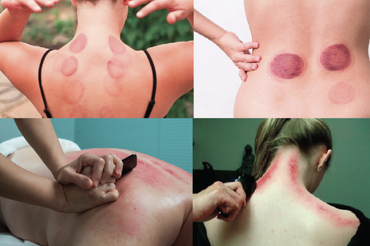
In Chinese Medicine this practice decreases stagnation and stimulates the flow of Qi. It may speed up healing time, improve scar-tissue health, or treat muscle tension/pain/inflammation. Cupping therapy works by expanding capillaries and promoting blood flow into and out of the affected tissues. Cupping may or may not leave discolored marks on your skin. See image below.
Who may benefit from Cupping Therapy?
-Tight muscles or compressed nerves
-Shoulder, back, or hip pain
-Athletes or endurance training
-Chronic pain
-Respiratory inflammation
What is Gua Sha?
A Traditional Chinese Medicine technique sometimes called 'coining, scraping, or spooning" means "to scrape away disease". This instrument assisted press-stroking of the body may help restore circulation and break up any areas of stagnation, while helping to move Qi and blood. It involves a scraping tool which may result in red or discolored markings. In some instances clients experience temporary indentation or bumps of the skin after treatment. See image below.
Who may benefit from Gua Sha?
-Neck and shoulder pain or tightness
-Back pain or tightness
-Tendonitis
-Headaches caused by muscle tension and stress
-TMJ
-Asthma
-Plantar fasciitis
-Digestive issues
-Lympatic drainage
-Poor blood circulation
Cupping and Gua Sha markings
This method is influenced by the structural integration trainings of Dr. Ida P. Rolf, Tom Meyers, and Til Luchau. Structural Integration addresses dysfunction, immobility, strain, and instability - often the cause of injury, pain, tension, and poor posture - in the body. Each layer of the body must be considered in order to reorganize the structure to establish a more balanced and functional system. Structural integration may help support the body in reorienting to its natural alignment. It will help you connect with and better understand your body better. At least three sessions are recommended for most clients, although one session can also be beneficial. For the most long term results, clients would consider participating in a traditional series of ten sessions. Clients have found the most success by implementing consistency in both receiving bodywork and incorporating recommended exercises or stretches.
Who may benefit from Integrated Bodywork?
-Low back pain
-Frozen shoulder
-Chronic shoulder or neck tension
-Pain via scoliosis
-Plantar fasciitis
-Repetitive motion injuries
-Athletic performance or recovery
-Pelvic care
-Postural habituation
-Anxiety
What is Tuina?
Means "grasp and push". It is a Chinese system of therapy that uses kneading, grasping, rolling, friction, rocking, vibration, acupressure, and manipulation to relieve pain, release tension, treat common ailments, and stimulate the overall flow of Qi.
What is Craniosacral Therapy?
A non-invasive form of massage which utilizes gentle touch to address the bones in the head, spinal column, and sacrum. It primarily addresses asymmetry in the fluid and membranes which protect the spinal cord and brain. To realign any blocked flow of fluid, the therapist may include Myofascial Release, Positional Release, Muscle Energy Technique, or acupressure.
What is Myofascial Release?
Gentle, prolonged pressure to muscles which stretches out areas of stiffness. Light pressure is placed directly on the skin (no massage lubricants) and is sustained for a few minutes. When the tissue releases, pressure is removed, allowing freedom from pressure and pain.
What is Cupping Therapy?
In Chinese Medicine this practice decreases stagnation and stimulates the flow of Qi. It may speed up healing time, improve scar-tissue health, or treat muscle tension/pain/inflammation. Cupping therapy works by expanding capillaries and promoting blood flow into and out of the affected tissues. Cupping may or may not leave discolored marks on your skin. See image below.
Who may benefit from Cupping Therapy?
-Tight muscles or compressed nerves
-Shoulder, back, or hip pain
-Athletes or endurance training
-Chronic pain
-Respiratory inflammation
What is Gua Sha?
A Traditional Chinese Medicine technique sometimes called 'coining, scraping, or spooning" means "to scrape away disease". This instrument assisted press-stroking of the body may help restore circulation and break up any areas of stagnation, while helping to move Qi and blood. It involves a scraping tool which may result in red or discolored markings. In some instances clients experience temporary indentation or bumps of the skin after treatment. See image below.
Who may benefit from Gua Sha?
-Neck and shoulder pain or tightness
-Back pain or tightness
-Tendonitis
-Headaches caused by muscle tension and stress
-TMJ
-Asthma
-Plantar fasciitis
-Digestive issues
-Lympatic drainage
-Poor blood circulation
Cupping and Gua Sha markings